In the world of computing, I have observed an interesting trend in the last 2 decades. I thought it would be useful to write it down and others might have other thoughts around it.
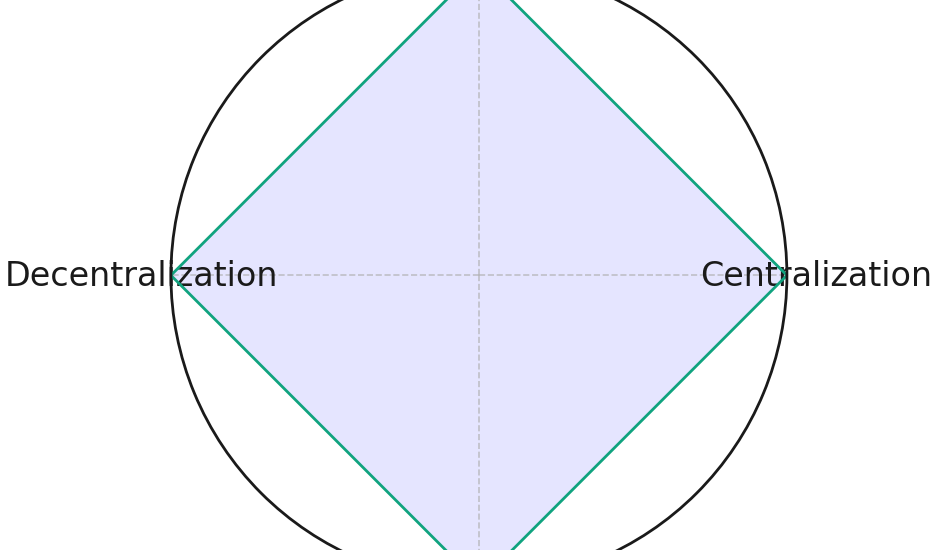
Technology follows cycles, and everything ends up going in circles like a fly landing on a bicycle wheel.
Let’s take an example of technological growth in any field of computing.
- We build technology based on limited resources
- When resource limitations occur, we attempt to pool resources to solve the problem of resource limitations
- The consequences of crop in or moore’s law centralization are maintained and we get more power
- They are pushing technology back into devices as more power becomes available and improvements begin to be made.
- circle back to point 1
Now this seems too simple, so I’ve thought of some examples
Example: Artificial Intelligence / LLM / Gen AI
While the LLM world surprised everyone in 2022 with OpenAI pushing the adoption of GPT. I’ve made my thoughts on that topic clear before. But since we are talking about cycles, we again see similar cycles occurring in this domain as well:
- Initial impressions, this requires a huge amount of computing power and can only be run on the most powerful computers, thus making nvidia cards sold out everywhere. For the first time in a while, GPUs are being used for something other than crypto coin mining as an alternative purpose
- Although the largest and worst LLM Models still require a lot of computing power, smaller models are starting to appear with 7B or 13B parameter models that are capable of working and providing good quality results. With quantization in images, system requirements slow down. Read here for an attempt at local LLM Setup on older hardware. and has helped in this aspect.
- After the initial burst of activity, the focus shifted to SLM (small language model) to enable it to run at a smaller size to be run from mobile devices. Phi-2 from Microsoft, DistilBert from Google,
- Both Apple and Google have now confirmed that they can make language models work on mobile devices themselves and in a completely offline way.
- Slowly we are moving towards the first changes in moving the System to the user and I am sure once again someone will suggest moving to a centralized setup for better control.

Example: voice translation
- tools with limited capabilities developed: natural speech of dragons, etc
- centralized systems take over: siri, ok google, etc
- voices against centralized power and increasing CPU capabilities in mobile devices occurred
- Voice translation services are now pushed to local systems
- advances in computing with the goal of pushing/testing ongoing boundaries.
Apple m1 does that, mobile computing chips do the same.

Example: web technology
- The thin client connects to the central server the terminal does everything.
- limitations hit and PCs became affordable computing that was outsourced to the local.
- Centralized settings and the need to perform complex calculations led to web server clients 1.0
- web 2.0 saw things move back to the client side as CPUs got better
- chrome came along and started using more GPUs and CPUs as well as improved JavaScript on the client side.
- now peak limit organizations like Mighty are pushing computing to the cloud again via mighty apps or similar.

Example: Entertainment / Streaming
- Early cinema and pictography were confined to elite circles
- Slowly technology became affordable, home cameras, video recorders for creation: Cassettes, CDs, DVDs for storage
- Centralization opportunities are discovered by streaming service companies because of the large amount of data
- Now the world is realizing that because of centralization, it is getting easier for streaming services to dictate terms.
- People are now starting to return to DVDs, or downloading and storing data that they prefer

Example: Software Development
- Languages like C/C++ focus on compiled code and most of the code is written by developers.
- As development work progressed, people realized that modularization was beneficial.
- Modules were created and the language began to focus on using modules sourced from others
- Module sourcing becomes a problem that is once again solved through centralization of module sources (pip, rpm, deb, rubygems, etc)
- People got so caught up in trying to load modules into a centralized repo that slowly new languages inherently allowed multiple sources
- Languages like npm, go etc have default settings to allow multiple module sources.
- Although languages like npm use extreme modularization and allow all modules to be downloaded everywhere, the npm modules folder itself is a source of jokes.
- Modern languages like golang or rust focus on having modules but the end result is a monolith containing all the necessary code in one place pre-compiled

Example: cryptocurrencies & web3.0
- The central government has too much power so that people want everything out of the hands of the central government. They envision bitcoin as an illegal or impermissible and not centrally controlled currency where the value of the coin will be determined by the two parties to the deal. Utopian dreams come true: everyone has their own goods and can determine prices (remember anyone’s barter system).
- bitcoin is an OSS and just like other OSS forks started to form as different thoughts emerged
- litecoin, you name it coins, Dogecoin was created to mock the whole cryptocurrency trend.
- we even saw bitcoin being forked for 10 variations.
- Ethereum came along and tried to do some innovation. We also have branches for that.
- Meanwhile, a large number of people began to gather around the movement and work on the financial and trading side.
- Trading requires some kind of governance because fast trading requires people who trust each other. We can build trust through the platform.
- A trusted platform means large transactions and lots of transactions means a lot of money wasted on transaction fees. When prices rise, transactions feel prohibitive.
- Therefore, an off-chain exchange and transaction system was initiated and crypto exchanges became its center.
- From a completely decentralized concept, we moved to a completely centralized exchange, which ultimately rewards people who deposit money on the exchange. I assume this will happen again in the next few years, when people control things themselves, not on the exchange.
That’s all for today. I’ll post more observations like that when I have more time. Subscribe if you like this style of writing and these thoughts will encourage me to share more.
Also, share your thoughts and observations around these trends in the comments below👇
An abridged version of this article was first published on linkedin However this is a revised and expanded version of the blog post.
Digital Agency
we specialize in maximizing your online visibility and driving measurable results through strategic SEO solutions. We’re here to help businesses like yours rank higher, attract quality traffic, and achieve long-term growth in the ever-evolving digital landscape.